Mahabharat: Ek Dharmayudh on JioHotstar: A Game Changer or a Gimmick?
The streaming platform JioHotstar is venturing into uncharted territory with the launch of Mahabharat: Ek Dharmayudh, a bold re-imagining of the ancient Indian epic through the lens of artificial intelligence. Launched on 25 October 2025 on JioHotstar and scheduled to premiere on Star Plus on 26 October at 7:30 PM IST, this 100-episode series is being touted as “India’s first AI-powered mythological premium entertainment series.” Exchange4media+3mint+3The Economic Times+3
As with any major innovation, this project invites questions: is it a game-changer for Indian mythological storytelling and OTT content, or is it just a gimmick riding on hype and AI buzzwords?
🎬 What the Project is
Let’s start with what Mahabharat: Ek Dharmayudh actually is and why it matters.
Concept & Launch
-
The series is produced by JioStar (Entertainment arm of the Jio group) in partnership with Collective Media Network. The Economic Times+1
-
It utilises AI technology for its visuals and animation, positioning itself as a fusion of ancient myth and modern machine intelligence. According to the makers: “a timeless epic … reimagined for a new era of viewers using artificial intelligence that helps breathe life into ancient legends with breathtaking scale and emotional depth.” The Times of India+1
-
The series is being offered in seven languages and comprises 100 episodes covering the events of the epic: the build-up, the war of Kurukshetra, and its aftermath. mint+1
Where & When to Watch
-
Streaming on JioHotstar from 25 October 2025. mint+1
-
Television premiere on Star Plus from 26 October 2025 at 7:30 PM IST. FilmiBeat+1
Audience & Scale
-
Given the mythological status of the original Mahabharata and its erstwhile television renditions (notably the one by B. R. Chopra in the late 1980s), the stakes are high: many will compare it to previous classics. OTTPlay+1
-
The decision to go full-AI is noteworthy: instead of live-action sets and human actors (as in prior versions), this series leans heavily into technology. mint+1
✅ Potential Strengths: Why This Could Be a Game Changer
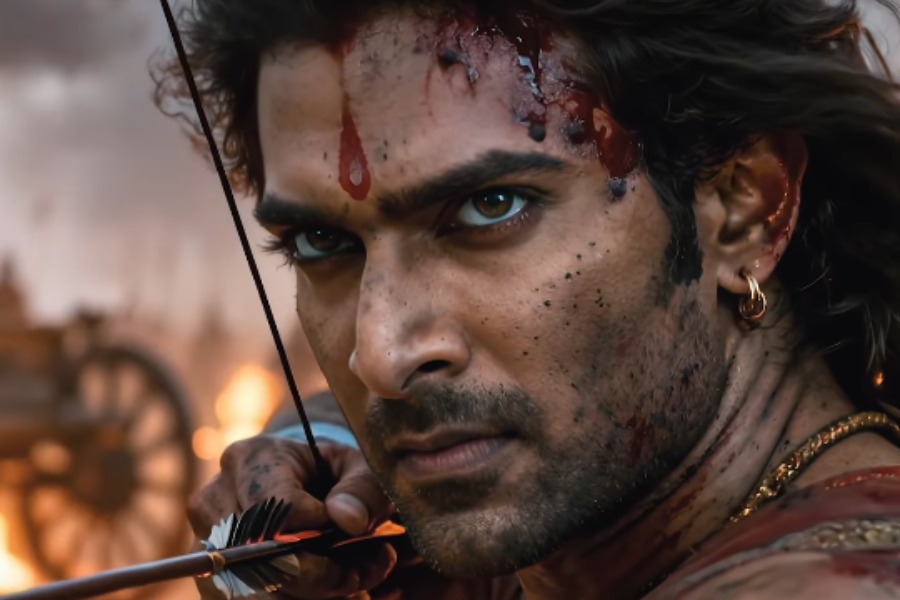
There are compelling reasons to believe this might mark a turning point in Indian OTT content.
1. Technological Leap for Mythology
Mythological storytelling in India has often been constrained by budgets, special effects limitations or dated production values. An AI-powered approach could change that by enabling:
-
Scale: Grandiose visuals of battles, gods, vast armies, mythical settings — done with fewer constraints.
-
Accessibility: Multiple languages make it easier to reach pan-Indian audiences and even diaspora viewers.
-
Innovation: This project sets a precedent: ancient narratives re-imagined with modern tech — perhaps appealing to younger audiences. As one article puts it: “our oldest and most revered stories can still be our most futuristic yet.” The Times of India+1
2. New Business & Creative Model
-
Cost-efficiencies: If AI can reduce reliance on huge sets, huge casts, and protracted shoot schedules, this could open up more ambitious series at lower cost.
-
Fast production: With AI-aided visualization, perhaps more content can be produced and localized quicker.
-
Experimentation: This is a bold experiment by a major media player — if successful, it might motivate more such content (AI-generated or assisted) in India.
3. Mass Appeal + Nostalgia
-
The Mahabharata is deeply familiar to Indian audiences. Leveraging that familiarity while offering a new visual experience can attract both older viewers (nostalgia) and younger ones (novelty).
-
For a platform like JioHotstar, which competes aggressively in the content space, this adds a unique selling point.
❓ But Caveats & Concerns: Is It Just a Gimmick?
Despite the optimism, there are some serious concerns that might hamper the project’s impact.
A. Authenticity & Creative Depth
-
The original Mahabharata is not just spectacle; it's about nuanced characters, moral dilemmas, rich philosophies and cultural weight. Will an AI-generated visual treatment preserve that depth?
-
Some critics question whether machine-assisted visuals can match human artistry, continuity of character expressions, richness of human acting.
-
Online reactions illustrate the scepticism. For example:
“Just watched this in an ad today… Don’t they feel any shame promoting this prompt engineered garbage. No efforts, eating jobs of animators….” Reddit
-
There's concern that the project may prioritise speed and novelty over craft.
B. Risk of Lower Quality or Visual Inconsistencies
-
One article flagged visual errors from the trailer: unnatural clothing, odd body proportions, etc., which point to imperfections in AI-generated visuals. M9.news
-
Mythological epics demand high standard of design (sets, costumes, characters). If these fall below expected standards, audiences may reject it.
C. Cultural & Audience Expectations
-
The Mahabharata has been adapted before with great success — therefore audiences have established benchmarks. Comparisons are inevitable (to B. R. Chopra’s version, among others).
-
Purist viewers of mythological content might resist reinterpretation via AI, fearing loss of sanctity, value or sincerity.
-
Also: if the series comes across as gimmicky (all visual spectacle, little substance), it may alienate both dedicated myth-fans and the broader audience.
D. Marketing vs Substance
-
The “first AI-powered mythological series” label is a strong marketing hook. But if the execution falls short, it may turn into a “gimmick” — something that draws interest but lacks staying power.
🔍 My Take: Game-Changer or Gimmick?
So where does this launch stand? My verdict: it has the potential to be a game-changer, but it remains a high-risk endeavour. It partly depends on execution, partly on audience reaction, and partly on whether AI is used as a tool rather than a crutch.
Why I lean Game-Changer
-
The ambition is big, and the platform is major. When JioHotstar chooses a 100-episode AI series, it signals they believe in the format.
-
If done well, this could open up a new genre of “AI-assisted mythological/epic-scale” storytelling in India — something that previously may have been cost-prohibitive.
-
The global streaming market is competitive; Indian platforms need unique offerings. This certainly qualifies as unique.
Why the Gimmick risk is real
-
A bold concept doesn’t guarantee quality. If AI visuals are rough, characters lack emotional depth, or the writing is shallow, then it will flop.
-
Mythology demands trust and reverence. If audiences feel the story is “cheapened” by being AI-generated, there can be backlash.
-
The “novelty factor” may drive initial views, but long-term retention depends on substance — acting, writing, direction, pacing etc. AI cannot replace these entirely (at least not yet).
🧐 What to Watch For
If you’re curious about this series (and maybe you are), here are key metrics to evaluate whether this really shifts the paradigm:
-
Visual & Production Quality: Do the AI visuals hold up across episodes? Are they coherent, polished, emotionally resonant?
-
Writing & Characters: Are the iconic characters handled with depth? Is the storytelling compelling rather than just spectacle?
-
Audience Reception: What are viewers saying after a few episodes? Are they sticking, recommending, or dropping off?
-
Cultural Resonance: Does the series manage to honour the source material while offering something fresh?
-
Impact on the Industry: Will this inspire more AI-generated shows, or will it be viewed as a one-off experiment?
📝 Conclusion
Mahabharat: Ek Dharmayudh marks a significant moment in Indian streaming — a mythological epic re-imagined through AI, backed by a major platform. If it succeeds, we may see a new wave of storytelling, where tradition and technology combine in exciting ways. But the line between innovation and novelty is thin — and if execution misfires, it could end up as a gimmick rather than a game changer.
In short: Let’s watch closely. This could be the future — or simply a flashy experiment.
Comments
Post a Comment